Feeds:
Posts
Comments

Archive for the ‘Fragrance Marketing’ Category

More than ever before, people are focused on getting the most use out of their belongings.  Drivers are opting to repair vs. replace their cars, while fashionistas are now “shopping their closets”; reaching for pieces that they haven’t worn in a long time, or combining them in creative ways to produce a “new outfit” that didn’t cost a dime!   The key is to get extended use and/or incremental value out of what we already have.

So how can we apply this to fragrance?  One way is by putting the scents we already own to new uses.   I like to use  fresh, clean, fruity or citrusy scents as closet and drawer refreshers, while voluptuous florals make a nice fragrance statement when used to scent bedrooms and bathrooms.    Lightly spray on a light bulb, and the scent will be dispersed throughout the room as the bulb warms up.  

For a really special indulgence, I spray my bed linens with those fragrances that I find truly luxurious; those that I would normally reserve for a special night out.  I am particularly fond of sensual florals with woody and spicy back notes, and love their scent on my pillow…heavenly!
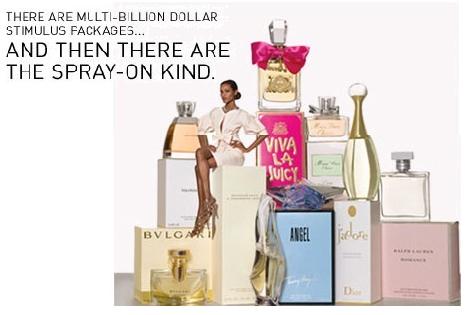
Get more value out of your fragrance purchase!

Get more value out of your fragrance purchase!

Being value-conscious doesn’t have to mean foregoing a new purchase, though.  You can get much value out of a new fragrance by selecting one that:  a) you absolutely love,  b) is season-appropriate,  c) is “easy” enough to be worn daily and  d) that also lends itself for some of the additional uses described above.  You’ll feel better about your purchase, as you’ll be getting a lot of value for your money! 

So, start viewing your fragrance collection in a whole new light, and see how many different ways you can make your own scent-sational – yet value-conscious – statement!
Read Full Post »

The hair care market has been energized by a flurry of new product launches.   Although product aesthetics continue to be important, hair protection seems to be the featured product attribute shared by the most recent hair care launches.aveeno-nourish2Aveeno Nourish+ hair care

Formulas that claimed hair strengthening, color protection and heat protection benefits represented nearly 64% of the 1,155 hair care products introduced in 2007 and early 2008.   In 2009, the “protection” trend doesn’t appear to be slowing down.   With greater numbers of consumers cutting back on expenses and opting to perform some salon treatments at home, hair protection becomes a real issue of importance.  

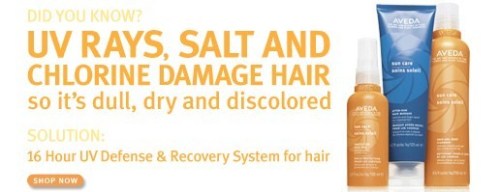
Aveda Sun Care

 Protection takes on many different forms.  It might refer to color protection, UV protection, to imparting added moisture or conditioning ingredients to the hair shaft, or it can also refer to environmental responsibility. 

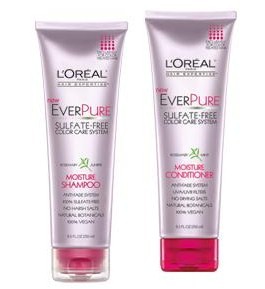
Consumers are ever more vigilant about:  companies’ manufacturing practices and sustainability initiatives, biodegradability of product packaging materials, and product ingredients’ ultimate effect on the environment.   This has given rise to an increasing number of launches of sulfate-free shampoos and conditioners, which are perceived as healthier for the hair as well as the environment.

L'Oreal EverPure sulfate free hair care

Last – but not least – aesthetics, particularly consumers’ desire for their hair care products to deliver an overall “sensory experience”, continues to be a valuable enhancement to product performance attributes.  Texture, product-feel during application and visual impact are also important product features. 

The scent, meanwhile, must convey freshness, purity, naturalness and promote  a feeling of well-being, while also incorporating fragrance notes that communicate the protective, healing and nourishing product characteristics.

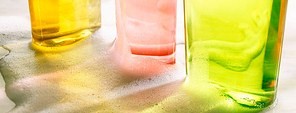
shampoo-bottles


Read Full Post »

The advertising industry is banking on nostalgia themes to get consumers out of their spending slump. 

Consumer good giants are reaching back into their archives and reintroducing earlier jingles or packaging designs used for their products in earlier decades, in hopes that consumers’ nostalgia about the past will help fuel some  optimism about life today.

Pepsi Throwback and Mountain Dew ThrowbackPepsi Cola and Mountain Dew have reintroduced “throwback versions” of their popular sodas that are evocative of the ’60s and ’70s, and sweetened with real sugar instead of with high fructose corn syrup.  Meanwhile, Diet Coke has gone back to its 1982 tag line, “Just for the taste of it”.              

Cotton Inc’s. 1981 advertising campaign reassured us that “The touch, the feel of cotton”  was “The fabric of our lives”; a theme that is revisited in 2009, as they pursue a marketing strategy of going back “to the brand’s rich heritage”.   View campaign at: http://www.thefabricofourlives.com.              Source:  Marketing Daily 4/22/09.

General Mills cereals are also being sold in throwback boxes at select Target stores, while I Can’t Believe It’s Not Butter launches a new campaign with a 1950’s visual style, but with a very contemporary message about current health & nutrition trends.   

The Buttertons

The Buttertons

Trix: Retro and Current 

Watch The Buttertons’ transformation from 1950’s cheeky to 2009 hip & healthy by clicking on the link to the left.  


 Woman enjoying music, listening to old-fashioned record playerIn fragrance, nostalgia themes are interpreted with gourmand notes such as vanilla & chocolate, popular for their intrinsic feel-good qualities.  Soft woods, musk and nutty notes also wrap you in their sweet, warm and creamy comfort. 

Expect to see many of these nostalgic notes incorporated into the green fresh floral and botanical fragrance characters that have been the common denominator in recent scent development as consumers look for an antidote to life’s uncertainties and stresses!

Have a fragrance or product category you’d like to read more about?…Send me a note and you’ll find it in a future post!

Read Full Post »

On a recent shopping trip, I leisurely strolled along our local mega-mall, admiring the vibrant colors and patterns of the latest Spring / Summer collections on display.  One the one hand were the eye-popping turquoises, tangerines and sunny yellows overflowing with floral patterns.  In contrast to those were ethnic-inspired designs interpreted in warm terracottas, earthy olive greens, taupe and chocolate browns evocative of an exotic safari or lush tropical adventure!Water-rose tunic

The vast array of colors and themes immediately got my “creative marketing”  juices flowing, and I found myself wondering… “if that combination of colors were a fragrance, what would it smell like?”    Some of the fragrance concepts that came to mind…

A feminine silk organza dress with a delicate turquoise and olive floral print got me thinking about sea-inspired aquatic top notes enhanced with a white floral heart and a hint of botanical freshness.  Floral-print silk organza dress 

A scent inspired by a casual chino dress printed with bold chocolate-and-lime-colored Moroccan flowers would open up with an effervescent citrus burst, offset by a creamy floral heart containing delicate nuances of ethnic woods and spices, but kept fresh and casual by a leafy green clarity throughout.   Moroccan floral luxe chino dress

 All this creativity…inspired by color!  But that is exactly the point.   Scents are living, breathing art, and their source of inspiration should know no limits!   We should look EVERYWHERE for inspiration, as it might be found in the most unlikely places.   This time we found inspiration in color and fashion; next time…who knows?

 (Photo credits:  Talbots)

Read Full Post »

Sometimes too much of a good thing just…isn’t! 

Food manufacturers are realizing that long ingredient lists that read like chemical formulas with unpronounceable names do not communicate the “healthy-eating” message that prevails in today’s lifestyle. 

On a previous post, I talked about how fragrance trends are evolving to become more authentic and simplified without losing their scent integrity.   This is being achieved with fewer – but higher quality –  ingredients that are being used in the newer scent interpretations to convey a more authentic, natural feeling where ingredient provenance and sustainability were also key points for the scent’s marketability.

In the food industry, a similar shift is being seen.  Frito Lay redesigned its potato chips and Tostitos packages to connect their products back to their agricultural origins – that is, potatoes and corn – while informing us that they are made with just three ingredients.  Snapple’s reformulated beverage line reminds us that “the best stuff on earth” is made with green and black tea leaves and “real” sugar.  Haagen-Dazs’ new Five ice cream line assures consumers that its ice cream flavors only contain five ingredients:  skim milk, cream, sugar, egg yolks and (flavor).   This is the antithesis of the highly processed foods that have come under greater scrutiny after recent product recalls following the waves of people across the nation who became ill from poorly-processed items.

The message of simplicity works in a two-fold manner.  It is suggestive of something that is simple enough to be homemade, therefore “authentic”.  But its appeal is especially significant  because we are now living through one of the most tumultuous economic times resulting from our past excesses, and we are all poised to go back to basics.   Right now, simple sounds…a lot better!

Read Full Post »

Confirming that the Beauty from Within category which I first alluded to on my April 8th post is in growth mode, earlier this month two new products were reported to be entering the US marketplace.

Cosmetic Design magazine reported (in its 4/9/09 issue) that a Japanese lychee extract under the  Oliginol trade name will be marketed by New York-based Maypro Industries for use in beverages, confectionery and dietary supplements.    The product will be marketed on its ability to improve skin health due to the higher-than average beneficial polyphenol concentration that is present as a result of the extraction process used for Oliginol, compared to other lychee extracts available in the market.  Oliginol’s polyphenol concentration is said to be “up to three times higher than other lychee forms”.

Meanwhile, Nutraceuticals World highlighted Utah-based Sibu Beauty’s product line in its April 2009 issue.   The line features the seabuckthorn berry – a highly nutrient and energizing ingredient –  in its four-part beauty regimen that claims to improve the health of skin, hair and nails.  The line consists of  Revitalize & Renew liquid dietary supplement, Repair & Protect facial cream, Cleanse & Detox facial soap and Cellular Support soft gel supplements that are rich in antioxidants and omega 7 complex.

So, what implications does the emergence of this new category pose for those responsible for creative fragrance development and product marketing?    For starters, increasingly innovative ingredients with measurable health & beauty benefits will need to be sourced, as consumers will come to expect a greater variety beyond the more recognizable super-fruit ingredients which they have become increasingly familiar with. 

Furthermore, perfumers will be challenged to interpret those ingredients into scents that accurately support the “health & beauty” positioning of the finished products, while also being esthetically pleasing and representative of current fragrance trends.   Meanwhile, marketers are tasked with creating a compelling ingredient story that  not only supports the product positioning, but that will furthermore entice consumers to give the product a try!

Read Full Post »

In today’s challenging economic climate, consumers have been forced to modify their purchasing habits in order to accommodate changes in their employment and economic status. 

Traditionally considered a recession-proof category, in the past fine fragrances would successfully ride out difficult economic conditions because consumers would buy into the “affordable luxury” that they promised.    The fragrance industry continues to take steps to keep consumers interested in new fragrance product launches by offering new scent themes that promise to deliver on the luxurious and pampering lifestyles consumers have come to expect, while still remaining relevant and true to the economic realities of today’s world, where a premium is placed on a product’s perceived “value”.

Until recently, fragrances interpreted “luxury” via the use of exquisite and rare ingredients, heady floral notes, exotic woods and spices that were combined in complex interpretations that reverberated with movement, texture and intoxicating scent!

Today, luxury is communicated using escapism themes inspired by global destinations and ingredients; a fragrant stay-cation, if you will.   Also via unique ingredients with a perceived benefit – usually health-related – and particularly those associated with superfoods.  Once-unknown fruits such as the acai berry, pomegranate, lychee and noni have now gone mainstream, as consumers increasingly pursue health and wellness to enrich and improve their lives; a well-lived healthy life is a luxury, after all! 

Yet another interpretation of luxury is achieved with fragrances that are increasingly natural and fresh with a focus on authenticity of character and “transparency of the ingredients’ provenance”.   Today’s consumers are savvy and sophisticated, and they understand the premium value of a fragrance that – unlike scents from the past with multi-layered structures that made big, bold statements- prefers to be luxuriously understated in its use of high quality fragrance notes that smell authentic…as nature intended, and its use of unique ingredients that don’t upset nature’s perfect balance. 

Undoubtedly, consumers perceive real value in fragrances that can fulfill their continued desire for aesthetic beauty and fantasy, but in the tempered manner that is more in sync with our times.

Read Full Post »


Although perhaps taken for granted by the average person, connoisseurs in the fragrance industry never overlook the importance of a product’s fragrance to its overall commercial success.

The team of perfumers, scent evaluators and marketers behind the fragrance development process for personal care, fine fragrances, fabric care and air care products understand that scent needs to be fully integrated into a product’s positioning, functionality and image.

Fragrance’s driving purpose is to effectively communicate the whole product concept:  its positioning, its target market, the featured product attributes and/or benefits.

The scent for a premium priced body cream claiming emollient and anti-aging properties will be much different than that of an anti-oxidant body lotion containing botanical ingredients.  The former product calls for a luxurious floral scent with oriental, woody or creamy touches for added depth, warmth and softness, hence delivering the richly “nourishing & caring” aspects of the product.

In contrast, the lighter body lotion product with a “well-being” positioning calls for a scent that communicates its own distinctive message.  The fragrance story should be built around a fresher & lighter “green” aspect that communicates the botanical positioning, with exotic fruity accents (anti-oxidant benefits) and sheer woods in the background to add texture and help deliver a “natural“  feeling.

Similarly, fragrance selections for a men’s shampoo will be vastly different than those used in a kid’s shampoo; prestige differs from mass, etc.  Get the picture?

So you see, a product’s scent isn’t just a pretty accessory that is added as an afterthought once a product’s basic chemical formulation has been developed.  Quite opposite… Fragrance designers recognize the integral role that scent plays in establishing a product on the path towards commercial success as a key driver of sales.   Hence the importance of aligning yourself with a fragrance marketing professional that knows how to let your fragrance tell its story…

Read Full Post »

« Newer Posts