Feeds:
Posts
Comments

Archive for the ‘Product Trends’ Category

Just returned from a weekend jaunt to “The Sweetest Place on Earth”, a/k/a Hershey Park.  But was my favorite part of the visit the sanity-defying rides?  The cardiac-arrest inducing roller-coasters?  The wallet-emptying shopping?  Or was it the brief tour of the mock chocolate factory in Hershey’s Chocolate World?  Bingo!

So, what was it about a 5-minute Disneyesque ride through a simulated chocolate factory that I found so appealing?  For starters, within seconds of entering the darkened ride, cacao’s appealing scent gently tickled my nose and I instantly found myself on the alert!  By minute two, I was immersed in full-blown chocolate-scented heaven.  By the end of the ride, I couldn’t wait to hit the shop and stock up on an assortment of every product that had been featured in the ride!

Afterwards, I couldn’t help but wonder if my nearly primitive reaction had been exacerbated by the scent of chocolate which further enhanced the stimulating visual experience of the “brown gold” pouring all around me.   Had the scent not been a prominent part of the ride, would my reaction have been the same?  I don’t think so.  As interesting as the chocolate manufacturing process is, it was the scent’s “promise” of what I would soon be tasting that prompted my guttural response.  Oh, and the singing cows were kind of cute too!
Read Full Post »

Things we are familiar with and that bring us comfort are our “go-to” staples when we are feeling stressed, uncertain or anxious.  It should be no surprise then that a recent EquiTrend poll measuring a variety of products’ brand equity conducted by Harris Interactive, revealed that some of the top ten brands (across a multitude of product categories)with the highest brand equity were familiar indulgences such as M&Ms, Reese’s cups and Hershey Kisses, in addition to the ever-reliable Honda, Sony and Kitchen Aid brands and premium Grey Goose vodka.

One would think that in the present economy consumers would automatically opt for the most inexpensive product, however the intrinsic value of “comfort” is directly tied into a product’s performance, reliability and the consumer’s familiarity with it.  Therefore selecting a cheaper alternative might pose a risk that the consumer might not be willing to take, and would rather pay a premium in exchange for guaranteed satisfaction.

In the fragrance world, we refer to Comfort Scents as those with food-based notes that are warm and sweet with nuances of vanilla, chocolate, nuts or spices.   Powdery notes have also long been associated with comfort because they take us back to our cuddle-filled childhood days, while fruity scents lend comfort with their familiarity, freshness and uncomplicated character. 

You will find that many of the newer fine fragrance introductions fall into those categories, or have comfort notes that are highlighted in their composition…And they’re exactly what we’ll need to help get us through this rough patch!


(To read more about the EquiTrend poll, go to MediaPost.com’s June 8th Marketing Daily brief: “Poor Economy Heightens Brand Equity”.)

Read Full Post »

Seville Oranges

Seville Oranges

In a previous post I wrote a bit about the growing trend of marketing aimed at Hispanic consumers, and how the fragrance industry might capitalize on this trend. 

The food products industry has a wide lead in this area, with several years of introducing snacks, beverages and dairy products with flavors that are inspired by the Latino culture and taste palate.

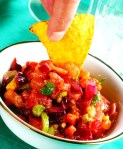
Chips & Salsa

Chips & Salsa

In the late 90’s we saw how sales of salsa nearly caught up with those of ketchup.  Today, chipotle & jalapeno and dulce de leche & tres leches are just as part of our culinary vernacular as are salt & pepper and vanilla & cinnamon.  But more recently, we are seeing other regional ingredients combined with the better-known Mexican and Cuban ones, in a Pan-Latin flavor fusion where the common denominator is their cultural diversity, depth and contrasting textures. 

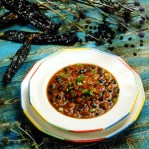
Black Bean Soup

Black Bean Soup

Some of the more popular emerging “new” flavors include:

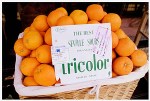
– Seville orange –  Mediterranean variety with a more bitter, less nectar-y flavor that imparts a citrus character with greater  “zing & heat” for a “Caribbean tang”.   

– Sofrito – A pesto-like simmering sauce incorporating basil, cilantro, parsley, onion, garlic, tomato, red or green pepper and olive oil.  Varies according to regional tastes.  It forms the basis of cooking for Puertorrican, Cuban, Dominican and Spanish foods. 

– Aji Amarillo (Yellow chile) – This peruvian original imparts a fruitiness to its inherent chile heat for more complexity and depth of flavor.

Aji Amarillo

Aji Amarillo

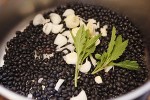
– Epazote – a Mexican herb that in its raw state smells pungent, but when simmered in dishes, it imparts a rich mellow flavor that American chefs are finding “addictive”.

Epazote Herbs

Epazote Herbs

As these and other flavors become more popular and are adopted into the mainstream, expect to see them used in scented personal care and household products, as they inspire innovative fragrance combinations that remain true to the trend toward globalism, food-inspired scents and contrasting textures…

Read Full Post »

In the June 1st issue of Advertising Age, a column was devoted entirely to the question whether consumer spending would be permanently changed in the wake of the “deepest recession in half a century, and (whether) the tightening will remain when the downturn ends“.  

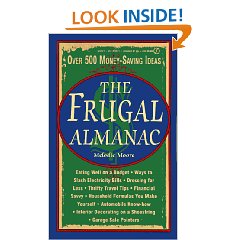
The frugal consumer's "bible"

The frugal consumer's "bible"

The consensus seems to point toward a general pattern of lesser spending and greater savings that will persist even after the worst of the recession is over.  However, the degree to which consumers will cling to this new modus vivendi depends on how directly they were impacted by the recent meltdown. 

Persons who were first-hand victims of job losses and/or home foreclosures and whose experience was deeply traumatic will be much more consistent about continuing to live a frugal lifestyle with a greater focus on saving.  Those for whom the economy has been merely “troubling and worrisome” will probably be more likely to resume their old spending habits once the economy becomes healthy again and lifestyle trends return to glamour and increased spending.

In yesterday’s Wall Street Journal, the surprising findings of  a poll conducted by JD Power (automotive forecasting) were reported.  Consumers were asked: “If you had $3500 to spend on features for a new car, which features would you choose?”  The market researchers were shocked to find a growing number of respondents declaring:  “I would keep the money!”  In short…Consumers weren’t even willing to part with imaginary money!!!  (Source:  WSJ 6/9/09  Eye on the Road).

In light of this discouraging news, expect for some of the changes now taking place in an effort to fuel current consumer spending may to become permanent fixtures of the marketplace.    Lower prices; smaller (more affordable) sizes; new positioning strategies such as organic, environmentally-friendly, fair trade or cause-related will all give consumers a ‘reason to buy’ that still communicates value…a central theme in the emerging consumer psyche!

Read Full Post »

Wake your taste buds with scent:  videoIt is a scientific fact that 90 percent of what we perceive as taste actually stems from our sense of smell.  Scent molecules processed through our nose trick our brains into thinking that we are tasting certain flavors.  Based on this scientific knowledge, the latest developments in the flavor industry include scent infusions applied to food packaging that will enhance product flavor while replacing costly and undesireable additives such as corn syrup or heavy cream.

Today, you can find sippy cups infused with a chocolate smell that will give your child the impression they are drinking flavored milk, water bottles filled with plain water but infused with scents that impart the perception of flavor, and low-sugar cereal boxes infused with a sweet smell to compensate for the reduced sugar content.

Whether consumers will “fall” for this trickery is yet to be seen, but what must be acknowledged is the innovative use of scent in an entirely new application.  Given the slowing growth of scented products in many categories, points must be given to innovators who are finding new uses for scent, beyond the cosmetics, toiletries and household arenas.  Regardless of the outcome, exploring new uses for scent keeps the industry moving forward, and stimulates creativity, innovation and ultimately the bottom line!

Read Full Post »

The U.S. Hispanic market is growing in size and in influence due to its predicted purchasing power and enthusiasm for buying products advertised on TV!   Marketers are now taking greater notice of this growing market, and reaching it successfully by “speaking its own language”!

FAST FACTS:  U.S. HISPANIC MARKET

  • There are nearly 46 million Hispanics in the U.S.
  • Many are multiple-income families
  • Are less likely to carry large mortgage or credit card debt
  • Eagerly buy products and services advertised on TV
  • On average, Hispanics spend a far higher percentage of their disposable income than the non-Hispanic U.S. population

Source:  Experian Simmons research

 While ratings at the “big 4” English-language TV networks (CBS, NBC, FOX, ABC) are flat, the top 3 Spanish-language stations (Univision, Telemundo, TeleFutura) are up by almost 22% for the coveted 18-49 demographic.  (Source:  Business Week 4/9/09).

Crema Pond's

“According to Nielsen’s projections, the top CPG growth categories in 2020 will include ethnic health and beauty products, medications and remedies, health aids, vitamins and cooking essentials…What’s driving the changes? According to Nielsen, the category shifts are directly tied to the changing face of American consumers.”  (Source:  Nielsen.com  5/12/09).

Not surprisingly, many of the top U.S. consumer products companies are putting much of their Hispanic marketing budgets into Spanish TV ads, with good results.

What’s next?…Fragrance products specifically designed for the U.S. Hispanic market?  Typically, in Latin American markets, fragrance preferences have gravitated toward very bold, recognizable “signature” scents, in both fine fragrance and household products.  

But with the current trend in the U.S. evolving around greener, fresher and more natural scents, we must not neglect the tastes and preferences of nearly 1/6 of our country’s population…particularly when that sizeable group likes to shop!

Read Full Post »

An interesting by-product of the economic meltdown that our country is living through is the shifting of priorities that is slowly – and surprisingly – becoming evident.  Yes, we have all adopted the “recessionista / frugalista” code of conduct whereby we pledge not to spend on unnecessary items for ourselves.   However, consumers are demonstrating a willingness to spend, if it is “for a greater good”.

50% of profits go to help African women & children affected by AIDS

50% of profits go to help African women & children affected by AIDS

On a personal note, I was recently the chairperson of a fund-raising event to benefit a foundation for a specific life-threatening illness.  Although I had already set a fund-raising goal for this year’s event based on the donations raised at the same event last year, I had already prepared myself mentally to be content if we so much as reached last year’s goal.  In my mind, there was very little chance that people would be overly generous this year, with all the financial turmoil that people were experiencing.    To my surprise, not only did we meet this year’s seemingly impossible goal, but we surpassed it by a substantial amount!   

Bringing relief to disaster victims

Bringing relief to disaster victims


Consumer products with tie-ins to charitable foundations that benefit worthy causes are evidently performing well.  And CPG companies are taking notice!  P&G’s yellow-label Tide will be available for a limited time only, but under its Loads of Hope initiative, is committed to contributing 10% of its sales to families affected by disasters.   In the meantime, Loads of Hope teams visit affected areas and do laundry for citizens who have been displaced by events that have affected their region. 

Shop pink & help end breast cancer

Shop pink & help end breast cancer


Other similary civic-minded and high profile “retail” campaigns are the “Pink for the Cure” items sold whereby a portion of sales benefits breast cancer research, as well as Gap’s “(PRODUCT) RED” campaign where half the profits from product sales go to the Global Fund and benefit women and children in Africa affected with AIDS.


So next time you’re looking for a fragrance, shampoo, body wash or lotion seek out those whose sale will benefit a greater good, and get double the enjoyment from your purchase!

Read Full Post »

Although the 18-39 demographic has always been the most pursued by marketers, baby boomers – those born between 1946 and 1964  – are a consumer group 78 million strong to whom advertisers are now paying more attention.Jane Fonda for L'Oreal

The older boomers are now approaching 63 years; an age at which many have fully paid off their mortgages, are now enjoying grand parenthood, and are more willing & able to spend money on their grandchildren and themselves.  This makes them doubly attractive to marketers because they are making purchases for more than one demographic group; i.e., they are just as likely to buy baby & children’s products as they are to buy travel services, or anti-aging skin care products. 


Companies such as Target, P&G, Kraft & L’Oreal are taking notice and increasingly targeting this age group:

Target's Aged in Advertising

 Boomers Life

Fifty today is very different than it was in the past.   Boomers today are vibrant, active and “plugged in”, comfortably embracing the digital information age; exactly what you want in a “dream consumer”!

Although in the past there was much debate about whether a “one size fits all” marketing approach effectively targeted consumers of all ages and lifestages, it has become more apparent that marketers are realizing the importance of customizing their messages to make a product truly relevant to a particular consumer group. 

Bearing this in mind, if the fragrance world were to follow in the footsteps of other product categories – say anti-aging skin care – some relevant messages (and fragrance positioning statements) that would appeal to the maturing consumer would be:  pampering, nourishing, luxurious, glowing, smoothing, firming, caring; attributes that can be creatively interpreted in fragrance notes that convey those characteristics.   Soft florals, light woods and creaminess effectively convey pampering & nourishing qualities, while fruity and botanical notes help connote a glowing and wellness aspect.  Tweaking of the notes can further enhance either the luxurious or caring aspects of a scent, depending on which fragrance ingredients are highlighted.

As I’ve stated before, fragrance is a breathing, living and continuously evolving art in which anything is possible.  All it takes is a little bit of imagination, creativity…and masterful perfumery!

Read Full Post »

While parents might think twice about unnecessary spending on themselves, they don’t hesitate on paying a premium price on quality products for their children.

Baby Care

Recent reports by NPD Beauty Trends and IRI data indicate that although the mass market has remained stable during this economic downturn, the prestige market for fragrances and cosmetics has suffered.  The baby & toddler personal care products market is proving to be a rare exception to this trend, fueled by the movement toward organic and natural products for their perceived superiority over traditional mass market products.

As reported by CosmeticsDesign.com, Datamonitor’s Matthey Taylor states that “in recent years the association of personal care with well-being has increased and is further amplified in the baby and toddler sector.”    Parental concerns over protecting their young childrens’ health and over providing the very best start for them, trigger their willingness to purchase these premium specialty products. 

Another evident shift in that market is the move away from products positioned as “disposable”,  and a move toward earth-friendly claims such as biodegradability.    Although this trend is not unique to the baby & toddler personal care market, it is in that demographic sector that marketers are seeing the most evidence of sales remaining strong thanks to parents who are unwilling to sacrifice the quality of products purchased for their children.

Toddler Shampoo Time

In line with the trends that are driving growth in this market, look for fragrance trends for baby & toddler personal care products to evolve as well.  Traditionally, scents for this target market revolved around baby powder-like notes, creaminess, herbals (particularly chamomile & lavender), and fruity berry notes.   However, wellness and eco-friendly messages are dominating the market, and helping to inspire many more fragrance directions in new product development.  Expect to see more botanical fragrance notes used in products for the younger set; green and more natural-smelling interpretations, fruitiness inspired by super fruits and wellness ingredients, creaminess from soy & oatmeal, plus soft sheer woodiness for the comfort aspect.

Read Full Post »

In its April 2009 issue, Home Accents Today featured color marketers’ forecasts for 2010, which all point to a year where color will be an instrumental vehicle that will help consumers cope with the challenges posed by the economic climate and its effects on our lifestyles and psyches.   Four broadly-categorized upcoming color trends have been identified:

A Neutral Palette – In times of great flux, few things are more reassuring than a serene, calming color palette.  In 2010, neutrals receive an updated interpretation beyond the expected creams, tans, khakis and earth tones.  Gray is heavily featured as a “new neutral”, and is interpreted with varying tonalities of olive green, silver, taupe, deep charcoal, brown, blue and pinkish beige with shimmer-like finishes.

The Color of Escapism– Global Destinations inspire luxurious and exotic colors that invite us to take a mental or physical break from the here and now as an alternative coping mechanism.    Some countries/cultures that are expected to contribute significantly to this trend are:  Russia, Dubai & Africa.  The colors represented will be luxurious and rich with sophisticated depth.   Metals, shimmer and translucency will dominate the color schemes represented by tones of gold, umber, plum, teal blue, royal purple and crimson reds.    Spicy hues inspired by exotic flavors such as masala & curry mix with nature-inspired colors of the wild African desert and savannah.

Blissfully Young & Radical–  A more vibrant collection of colors that – although radically contradictory to the other color trends – will coexist with them to provide  a visual distraction and enticement for consumers to buy, and get out of their “frugalista” funk!   Colors in this arena will be passionate, ingenious, manic, fun and portrayed in wild graphic designs and textures.  

Mother Earth’s Embrace – Not surprisingly, the rise in eco-friendly consumer behavior, increased consumption of organic and “whole” foods has also given rise to a new color palette that will dominate in the 2010 product season.  Organic colors will not be limited to earthy tones, but rather will be inspired by vibrant, fragrant and delicious-tasting treats found at the local farmer’s market.

So, get ready to enjoy a parade of product colors, textures and patterns aimed at lifting our spirits, and getting us back on the “shopping block”!

Read Full Post »

Older Posts »