Feeds:
Posts
Comments

Archive for the ‘Scented Products’ Category

During a recent smelling session for a product line I am involved in developing, I became hyper-aware about how critically important it is to “marry” the right scent to its matching product statement.

fragrance product development

While meeting with the Project Coordinator and Fragrance Sales Executive, we began to chat about the characteristics of the various scents we were smelling, which spanned a wide range of fragrance characteristics – from classic white florals, to bright juicy fruits, to fresh natural greens, and richly deep woody-spicy scents.  We were faced with the challenge of finding scents for various lines within a broad product category, but which individually had vastly different positioning statements, consumer targets and product benefits.

Much like a croupier at a casino dealing out cards, it surprised me how quickly I was able to sort the numerous scents into like-minded groupings which responded to the differing product criteria.  This could only be explained by my many years of experience in fragrance marketing and development, and the well-honed intuition which has resulted from my experiences in this field.

The correct fragrance-to-product pairing can spell success artistically, as well as commercially. A fragrance that doesn’t support or complement a product’s image, purpose, benefit or consumer target, won’t get that product very far.

I suddenly wondered whether the average consumer ever pauses to think about the amount of effort and thought that goes into selecting the scents in the products that they buy and enjoy?

Well…. do you???

Read Full Post »

It’s no coincidence that much of the vocabulary that is used to describe olfactive qualities stems from the musical world.

We describe fruity fragrances as having “notes” of apple, berries or melon; while a “medley” of bergamot, Meyer lemon and Valencia oranges that work in “unison” might be called a citrus “accord”.  Fragrances are described as scented “compositions” made up of ingredients that work in “harmony”.

During the creative and development process, “dissonant” notes or accords are refined until an ideal balance is achieved.   Perfumers aim to avoid creating fragrances that are either too “flat” or too “sharp”, striving instead for “interpretations” that are vibrant, that have “movement”, with a scent “signature”, and that make a long-lasting impression.

Only when all elements of a fragrance are deemed to be in perfect balance of “tempo” and “tone”, does it make its way into the market for everyone’s enjoyment!

Read Full Post »

On a recent morning with my workout group, one of the ladies asked for a recommendation of a laundry detergent that would effectively remove “sweaty odor” from her workout clothes.  Naturally, I chimed in with my recommendation, as did several others with their personal favorites.

Not surprisingly, someone emphatically declared her preference for fragrance-free laundry detergent.  This immediately prompted a debate of sorts regarding the majority’s preference and desire for fresh and clean-smelling clothes, vs. clothes which we know are clean (because they’ve been through the laundering process), but that do not have the “trademark clean smell” that only a scented fabric care product can deliver.

“Ms. Anti-Scent” posed this question to the rest of us:  “Why should my clothes have a scent, when my deodorant, shampoo and body lotion already do? ”

Well, when you put it that way…   Clearly, there will always be indisputable fans of fragrance – such as myself – as well as critics of its overuse.  However, my workout buddy does bring up a good point regarding her concern about wearing too many incompatible scents on her self, which may prove counterproductive; i.e. clashing instead of smashing!

However, with a little fragrance know-how, a quick-fix (of sorts) can be found to that situation.  You see, many personal care and fabric care scents are increasingly inspired by the fine fragrances sold at the department store counters — what in the fragrance industry is known as “trickle-down scents”.

So, if you’re partial to fruity scents, then select a shampoo (Herbal Essences) and/or laundry detergent (Gain) in that scent arena.  If you’re more of an oriental (warm vanilla spicy woody) fragrance lover, then reach for the bottle of Organix shampoo’s Shea Butter variant, and soften your clothes with Downy Simple Pleasures in Lavender Vanilla scent (my personal favorite!).  In this way, all this fragrance “layering” will be complementary, and will add to your signature style!

Read Full Post »

Things we are familiar with and that bring us comfort are our “go-to” staples when we are feeling stressed, uncertain or anxious.  It should be no surprise then that a recent EquiTrend poll measuring a variety of products’ brand equity conducted by Harris Interactive, revealed that some of the top ten brands (across a multitude of product categories)with the highest brand equity were familiar indulgences such as M&Ms, Reese’s cups and Hershey Kisses, in addition to the ever-reliable Honda, Sony and Kitchen Aid brands and premium Grey Goose vodka.

One would think that in the present economy consumers would automatically opt for the most inexpensive product, however the intrinsic value of “comfort” is directly tied into a product’s performance, reliability and the consumer’s familiarity with it.  Therefore selecting a cheaper alternative might pose a risk that the consumer might not be willing to take, and would rather pay a premium in exchange for guaranteed satisfaction.

In the fragrance world, we refer to Comfort Scents as those with food-based notes that are warm and sweet with nuances of vanilla, chocolate, nuts or spices.   Powdery notes have also long been associated with comfort because they take us back to our cuddle-filled childhood days, while fruity scents lend comfort with their familiarity, freshness and uncomplicated character. 

You will find that many of the newer fine fragrance introductions fall into those categories, or have comfort notes that are highlighted in their composition…And they’re exactly what we’ll need to help get us through this rough patch!


(To read more about the EquiTrend poll, go to MediaPost.com’s June 8th Marketing Daily brief: “Poor Economy Heightens Brand Equity”.)

Read Full Post »

Aside from traditional fragrance uses we are all familiar with…cologne for the body and scented personal care & household items, fragrance is finding new avenues for use which will not only help give the category a much-needed boost during the current sales slowdown, but which will also help integrate scent even deeper into our lives.

Food companies have been experimenting with incorporating scent to packaging in order to further enhance the gustatory experience of the food product.   Hospitals, and office buildings have also experimented with scents that promote relaxation, healing, focus or productivity.  

But more recently, restaurants and hospitality chains have also begun integrating scent as a means of ommunicating their “signature” brand message.  It is hoped that when a customer enters  establishment “XYZ”, the distinctive scent of that locale will become a permanent part of their favorable recollection of their experience at “XYZ”.

Much has been written about the intimate relationship and synergy that exists between scent and memory, and it is only natural that this relationship be explored beyond our personal use of fragrance, and broadened to include other experiential aspects of our lives.  Any thoughts?…

Read Full Post »

Wake your taste buds with scent:  videoIt is a scientific fact that 90 percent of what we perceive as taste actually stems from our sense of smell.  Scent molecules processed through our nose trick our brains into thinking that we are tasting certain flavors.  Based on this scientific knowledge, the latest developments in the flavor industry include scent infusions applied to food packaging that will enhance product flavor while replacing costly and undesireable additives such as corn syrup or heavy cream.

Today, you can find sippy cups infused with a chocolate smell that will give your child the impression they are drinking flavored milk, water bottles filled with plain water but infused with scents that impart the perception of flavor, and low-sugar cereal boxes infused with a sweet smell to compensate for the reduced sugar content.

Whether consumers will “fall” for this trickery is yet to be seen, but what must be acknowledged is the innovative use of scent in an entirely new application.  Given the slowing growth of scented products in many categories, points must be given to innovators who are finding new uses for scent, beyond the cosmetics, toiletries and household arenas.  Regardless of the outcome, exploring new uses for scent keeps the industry moving forward, and stimulates creativity, innovation and ultimately the bottom line!

Read Full Post »

While hosting a handful of family members at a Mother’s Day barbecue, the subject of this “fragrance marketing” blog came up, and gave rise to an unexpected debate: What exactly drives the purchase of fragrance products, namely fine fragrance, personal care or household products?

My years of experience in the fragrance industry have conditioned me to always expect – if not assume – that product scent will be the key defining attribute that will drive the purchase…but yesterday’s conversation shed new light on other attributes that are given as much consideration and that also weigh heavily on the purchase decision: mainly price and packaging.

My sister heartily agreed that product scent is what drives her purchase of one product over another competing one, regardless of price. My brother-in-law argued that price and perception of value is what determines which product he buys, while yet another relative stated that the aesthetic appeal of the product packaging is what prompts him to buy a particular product.  

Prior to my entree into the “world of fragrance”, my classical marketing background had taught me the importance of the “4 P’s”: product, pricing, packaging, promotion.  How have I allowed myself to become so seduced by the fragrance appeal of a product that I have discounted the importance and relevance of the other facets of a product’s identity?

The wide-ranging considerations given to the purchase decision by this group of consumers who share similar socio-economic profiles was very revealing to me.   

Are the days of grouping consumers (with shared demographics) into narrowly-defined classifications over?   Have the current economic conditions created a new “template” that will change the dynamics of product purchase and consumption?  And most importantly, how is new product development being modified so  that it acknowledges and satisfies this shift in consumer trends?

Read Full Post »

More than ever before, people are focused on getting the most use out of their belongings.  Drivers are opting to repair vs. replace their cars, while fashionistas are now “shopping their closets”; reaching for pieces that they haven’t worn in a long time, or combining them in creative ways to produce a “new outfit” that didn’t cost a dime!   The key is to get extended use and/or incremental value out of what we already have.

So how can we apply this to fragrance?  One way is by putting the scents we already own to new uses.   I like to use  fresh, clean, fruity or citrusy scents as closet and drawer refreshers, while voluptuous florals make a nice fragrance statement when used to scent bedrooms and bathrooms.    Lightly spray on a light bulb, and the scent will be dispersed throughout the room as the bulb warms up.  

For a really special indulgence, I spray my bed linens with those fragrances that I find truly luxurious; those that I would normally reserve for a special night out.  I am particularly fond of sensual florals with woody and spicy back notes, and love their scent on my pillow…heavenly!

Get more value out of your fragrance purchase!

Get more value out of your fragrance purchase!

Being value-conscious doesn’t have to mean foregoing a new purchase, though.  You can get much value out of a new fragrance by selecting one that:  a) you absolutely love,  b) is season-appropriate,  c) is “easy” enough to be worn daily and  d) that also lends itself for some of the additional uses described above.  You’ll feel better about your purchase, as you’ll be getting a lot of value for your money! 

So, start viewing your fragrance collection in a whole new light, and see how many different ways you can make your own scent-sational – yet value-conscious – statement!

Read Full Post »

The hair care market has been energized by a flurry of new product launches.   Although product aesthetics continue to be important, hair protection seems to be the featured product attribute shared by the most recent hair care launches.aveeno-nourish2Aveeno Nourish+ hair care

Formulas that claimed hair strengthening, color protection and heat protection benefits represented nearly 64% of the 1,155 hair care products introduced in 2007 and early 2008.   In 2009, the “protection” trend doesn’t appear to be slowing down.   With greater numbers of consumers cutting back on expenses and opting to perform some salon treatments at home, hair protection becomes a real issue of importance.  

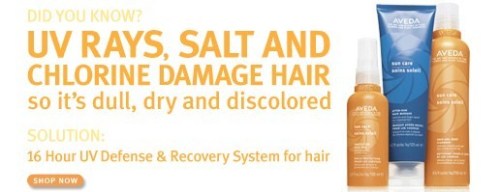
Aveda Sun Care

 Protection takes on many different forms.  It might refer to color protection, UV protection, to imparting added moisture or conditioning ingredients to the hair shaft, or it can also refer to environmental responsibility. 

Consumers are ever more vigilant about:  companies’ manufacturing practices and sustainability initiatives, biodegradability of product packaging materials, and product ingredients’ ultimate effect on the environment.   This has given rise to an increasing number of launches of sulfate-free shampoos and conditioners, which are perceived as healthier for the hair as well as the environment.

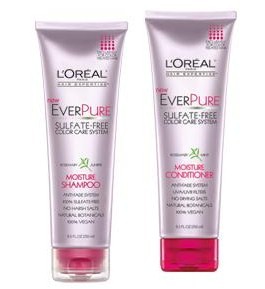
L'Oreal EverPure sulfate free hair care

Last – but not least – aesthetics, particularly consumers’ desire for their hair care products to deliver an overall “sensory experience”, continues to be a valuable enhancement to product performance attributes.  Texture, product-feel during application and visual impact are also important product features. 

The scent, meanwhile, must convey freshness, purity, naturalness and promote  a feeling of well-being, while also incorporating fragrance notes that communicate the protective, healing and nourishing product characteristics.

shampoo-bottles


Read Full Post »

The advertising industry is banking on nostalgia themes to get consumers out of their spending slump. 

Consumer good giants are reaching back into their archives and reintroducing earlier jingles or packaging designs used for their products in earlier decades, in hopes that consumers’ nostalgia about the past will help fuel some  optimism about life today.

Pepsi Throwback and Mountain Dew ThrowbackPepsi Cola and Mountain Dew have reintroduced “throwback versions” of their popular sodas that are evocative of the ’60s and ’70s, and sweetened with real sugar instead of with high fructose corn syrup.  Meanwhile, Diet Coke has gone back to its 1982 tag line, “Just for the taste of it”.              

Cotton Inc’s. 1981 advertising campaign reassured us that “The touch, the feel of cotton”  was “The fabric of our lives”; a theme that is revisited in 2009, as they pursue a marketing strategy of going back “to the brand’s rich heritage”.   View campaign at: http://www.thefabricofourlives.com.              Source:  Marketing Daily 4/22/09.

General Mills cereals are also being sold in throwback boxes at select Target stores, while I Can’t Believe It’s Not Butter launches a new campaign with a 1950’s visual style, but with a very contemporary message about current health & nutrition trends.   

The Buttertons

The Buttertons

Trix: Retro and Current 

Watch The Buttertons’ transformation from 1950’s cheeky to 2009 hip & healthy by clicking on the link to the left.  


 Woman enjoying music, listening to old-fashioned record playerIn fragrance, nostalgia themes are interpreted with gourmand notes such as vanilla & chocolate, popular for their intrinsic feel-good qualities.  Soft woods, musk and nutty notes also wrap you in their sweet, warm and creamy comfort. 

Expect to see many of these nostalgic notes incorporated into the green fresh floral and botanical fragrance characters that have been the common denominator in recent scent development as consumers look for an antidote to life’s uncertainties and stresses!

Have a fragrance or product category you’d like to read more about?…Send me a note and you’ll find it in a future post!

Read Full Post »

Older Posts »