Feeds:
Posts
Comments

Posts Tagged ‘Fragrance Marketing’

During a recent smelling session for a product line I am involved in developing, I became hyper-aware about how critically important it is to “marry” the right scent to its matching product statement.

fragrance product development

While meeting with the Project Coordinator and Fragrance Sales Executive, we began to chat about the characteristics of the various scents we were smelling, which spanned a wide range of fragrance characteristics – from classic white florals, to bright juicy fruits, to fresh natural greens, and richly deep woody-spicy scents.  We were faced with the challenge of finding scents for various lines within a broad product category, but which individually had vastly different positioning statements, consumer targets and product benefits.

Much like a croupier at a casino dealing out cards, it surprised me how quickly I was able to sort the numerous scents into like-minded groupings which responded to the differing product criteria.  This could only be explained by my many years of experience in fragrance marketing and development, and the well-honed intuition which has resulted from my experiences in this field.

The correct fragrance-to-product pairing can spell success artistically, as well as commercially. A fragrance that doesn’t support or complement a product’s image, purpose, benefit or consumer target, won’t get that product very far.

I suddenly wondered whether the average consumer ever pauses to think about the amount of effort and thought that goes into selecting the scents in the products that they buy and enjoy?

Well…. do you???

Read Full Post »

While hosting a handful of family members at a Mother’s Day barbecue, the subject of this “fragrance marketing” blog came up, and gave rise to an unexpected debate: What exactly drives the purchase of fragrance products, namely fine fragrance, personal care or household products?

My years of experience in the fragrance industry have conditioned me to always expect – if not assume – that product scent will be the key defining attribute that will drive the purchase…but yesterday’s conversation shed new light on other attributes that are given as much consideration and that also weigh heavily on the purchase decision: mainly price and packaging.

My sister heartily agreed that product scent is what drives her purchase of one product over another competing one, regardless of price. My brother-in-law argued that price and perception of value is what determines which product he buys, while yet another relative stated that the aesthetic appeal of the product packaging is what prompts him to buy a particular product.  

Prior to my entree into the “world of fragrance”, my classical marketing background had taught me the importance of the “4 P’s”: product, pricing, packaging, promotion.  How have I allowed myself to become so seduced by the fragrance appeal of a product that I have discounted the importance and relevance of the other facets of a product’s identity?

The wide-ranging considerations given to the purchase decision by this group of consumers who share similar socio-economic profiles was very revealing to me.   

Are the days of grouping consumers (with shared demographics) into narrowly-defined classifications over?   Have the current economic conditions created a new “template” that will change the dynamics of product purchase and consumption?  And most importantly, how is new product development being modified so  that it acknowledges and satisfies this shift in consumer trends?

Read Full Post »

The hair care market has been energized by a flurry of new product launches.   Although product aesthetics continue to be important, hair protection seems to be the featured product attribute shared by the most recent hair care launches.aveeno-nourish2Aveeno Nourish+ hair care

Formulas that claimed hair strengthening, color protection and heat protection benefits represented nearly 64% of the 1,155 hair care products introduced in 2007 and early 2008.   In 2009, the “protection” trend doesn’t appear to be slowing down.   With greater numbers of consumers cutting back on expenses and opting to perform some salon treatments at home, hair protection becomes a real issue of importance.  

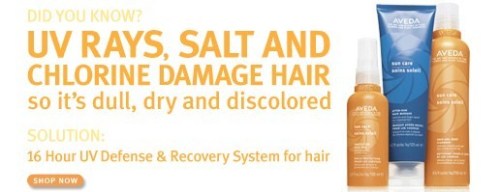
Aveda Sun Care

 Protection takes on many different forms.  It might refer to color protection, UV protection, to imparting added moisture or conditioning ingredients to the hair shaft, or it can also refer to environmental responsibility. 

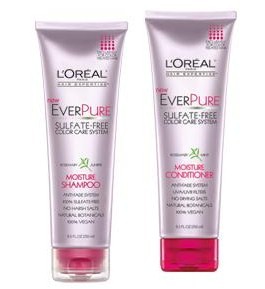
Consumers are ever more vigilant about:  companies’ manufacturing practices and sustainability initiatives, biodegradability of product packaging materials, and product ingredients’ ultimate effect on the environment.   This has given rise to an increasing number of launches of sulfate-free shampoos and conditioners, which are perceived as healthier for the hair as well as the environment.

L'Oreal EverPure sulfate free hair care

Last – but not least – aesthetics, particularly consumers’ desire for their hair care products to deliver an overall “sensory experience”, continues to be a valuable enhancement to product performance attributes.  Texture, product-feel during application and visual impact are also important product features. 

The scent, meanwhile, must convey freshness, purity, naturalness and promote  a feeling of well-being, while also incorporating fragrance notes that communicate the protective, healing and nourishing product characteristics.

shampoo-bottles


Read Full Post »

The advertising industry is banking on nostalgia themes to get consumers out of their spending slump. 

Consumer good giants are reaching back into their archives and reintroducing earlier jingles or packaging designs used for their products in earlier decades, in hopes that consumers’ nostalgia about the past will help fuel some  optimism about life today.

Pepsi Throwback and Mountain Dew ThrowbackPepsi Cola and Mountain Dew have reintroduced “throwback versions” of their popular sodas that are evocative of the ’60s and ’70s, and sweetened with real sugar instead of with high fructose corn syrup.  Meanwhile, Diet Coke has gone back to its 1982 tag line, “Just for the taste of it”.              

Cotton Inc’s. 1981 advertising campaign reassured us that “The touch, the feel of cotton”  was “The fabric of our lives”; a theme that is revisited in 2009, as they pursue a marketing strategy of going back “to the brand’s rich heritage”.   View campaign at: http://www.thefabricofourlives.com.              Source:  Marketing Daily 4/22/09.

General Mills cereals are also being sold in throwback boxes at select Target stores, while I Can’t Believe It’s Not Butter launches a new campaign with a 1950’s visual style, but with a very contemporary message about current health & nutrition trends.   

The Buttertons

The Buttertons

Trix: Retro and Current 

Watch The Buttertons’ transformation from 1950’s cheeky to 2009 hip & healthy by clicking on the link to the left.  


 Woman enjoying music, listening to old-fashioned record playerIn fragrance, nostalgia themes are interpreted with gourmand notes such as vanilla & chocolate, popular for their intrinsic feel-good qualities.  Soft woods, musk and nutty notes also wrap you in their sweet, warm and creamy comfort. 

Expect to see many of these nostalgic notes incorporated into the green fresh floral and botanical fragrance characters that have been the common denominator in recent scent development as consumers look for an antidote to life’s uncertainties and stresses!

Have a fragrance or product category you’d like to read more about?…Send me a note and you’ll find it in a future post!

Read Full Post »

On a recent shopping trip, I leisurely strolled along our local mega-mall, admiring the vibrant colors and patterns of the latest Spring / Summer collections on display.  One the one hand were the eye-popping turquoises, tangerines and sunny yellows overflowing with floral patterns.  In contrast to those were ethnic-inspired designs interpreted in warm terracottas, earthy olive greens, taupe and chocolate browns evocative of an exotic safari or lush tropical adventure!Water-rose tunic

The vast array of colors and themes immediately got my “creative marketing”  juices flowing, and I found myself wondering… “if that combination of colors were a fragrance, what would it smell like?”    Some of the fragrance concepts that came to mind…

A feminine silk organza dress with a delicate turquoise and olive floral print got me thinking about sea-inspired aquatic top notes enhanced with a white floral heart and a hint of botanical freshness.  Floral-print silk organza dress 

A scent inspired by a casual chino dress printed with bold chocolate-and-lime-colored Moroccan flowers would open up with an effervescent citrus burst, offset by a creamy floral heart containing delicate nuances of ethnic woods and spices, but kept fresh and casual by a leafy green clarity throughout.   Moroccan floral luxe chino dress

 All this creativity…inspired by color!  But that is exactly the point.   Scents are living, breathing art, and their source of inspiration should know no limits!   We should look EVERYWHERE for inspiration, as it might be found in the most unlikely places.   This time we found inspiration in color and fashion; next time…who knows?

 (Photo credits:  Talbots)

Read Full Post »


Although perhaps taken for granted by the average person, connoisseurs in the fragrance industry never overlook the importance of a product’s fragrance to its overall commercial success.

The team of perfumers, scent evaluators and marketers behind the fragrance development process for personal care, fine fragrances, fabric care and air care products understand that scent needs to be fully integrated into a product’s positioning, functionality and image.

Fragrance’s driving purpose is to effectively communicate the whole product concept:  its positioning, its target market, the featured product attributes and/or benefits.

The scent for a premium priced body cream claiming emollient and anti-aging properties will be much different than that of an anti-oxidant body lotion containing botanical ingredients.  The former product calls for a luxurious floral scent with oriental, woody or creamy touches for added depth, warmth and softness, hence delivering the richly “nourishing & caring” aspects of the product.

In contrast, the lighter body lotion product with a “well-being” positioning calls for a scent that communicates its own distinctive message.  The fragrance story should be built around a fresher & lighter “green” aspect that communicates the botanical positioning, with exotic fruity accents (anti-oxidant benefits) and sheer woods in the background to add texture and help deliver a “natural“  feeling.

Similarly, fragrance selections for a men’s shampoo will be vastly different than those used in a kid’s shampoo; prestige differs from mass, etc.  Get the picture?

So you see, a product’s scent isn’t just a pretty accessory that is added as an afterthought once a product’s basic chemical formulation has been developed.  Quite opposite… Fragrance designers recognize the integral role that scent plays in establishing a product on the path towards commercial success as a key driver of sales.   Hence the importance of aligning yourself with a fragrance marketing professional that knows how to let your fragrance tell its story…

Read Full Post »