Feeds:
Posts
Comments

Posts Tagged ‘Fragrance Trends’

Although the 18-39 demographic has always been the most pursued by marketers, baby boomers – those born between 1946 and 1964  – are a consumer group 78 million strong to whom advertisers are now paying more attention.Jane Fonda for L'Oreal

The older boomers are now approaching 63 years; an age at which many have fully paid off their mortgages, are now enjoying grand parenthood, and are more willing & able to spend money on their grandchildren and themselves.  This makes them doubly attractive to marketers because they are making purchases for more than one demographic group; i.e., they are just as likely to buy baby & children’s products as they are to buy travel services, or anti-aging skin care products. 


Companies such as Target, P&G, Kraft & L’Oreal are taking notice and increasingly targeting this age group:


Target's Aged in Advertising

 Boomers Life

Fifty today is very different than it was in the past.   Boomers today are vibrant, active and “plugged in”, comfortably embracing the digital information age; exactly what you want in a “dream consumer”!

Although in the past there was much debate about whether a “one size fits all” marketing approach effectively targeted consumers of all ages and lifestages, it has become more apparent that marketers are realizing the importance of customizing their messages to make a product truly relevant to a particular consumer group. 

Bearing this in mind, if the fragrance world were to follow in the footsteps of other product categories – say anti-aging skin care – some relevant messages (and fragrance positioning statements) that would appeal to the maturing consumer would be:  pampering, nourishing, luxurious, glowing, smoothing, firming, caring; attributes that can be creatively interpreted in fragrance notes that convey those characteristics.   Soft florals, light woods and creaminess effectively convey pampering & nourishing qualities, while fruity and botanical notes help connote a glowing and wellness aspect.  Tweaking of the notes can further enhance either the luxurious or caring aspects of a scent, depending on which fragrance ingredients are highlighted.

As I’ve stated before, fragrance is a breathing, living and continuously evolving art in which anything is possible.  All it takes is a little bit of imagination, creativity…and masterful perfumery!

Read Full Post »

The hair care market has been energized by a flurry of new product launches.   Although product aesthetics continue to be important, hair protection seems to be the featured product attribute shared by the most recent hair care launches.aveeno-nourish2Aveeno Nourish+ hair care

Formulas that claimed hair strengthening, color protection and heat protection benefits represented nearly 64% of the 1,155 hair care products introduced in 2007 and early 2008.   In 2009, the “protection” trend doesn’t appear to be slowing down.   With greater numbers of consumers cutting back on expenses and opting to perform some salon treatments at home, hair protection becomes a real issue of importance.  

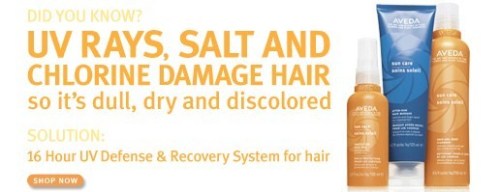
Aveda Sun Care

 Protection takes on many different forms.  It might refer to color protection, UV protection, to imparting added moisture or conditioning ingredients to the hair shaft, or it can also refer to environmental responsibility. 

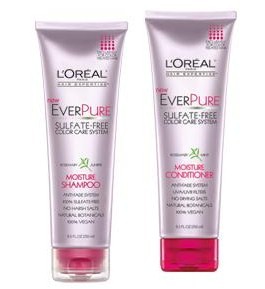
Consumers are ever more vigilant about:  companies’ manufacturing practices and sustainability initiatives, biodegradability of product packaging materials, and product ingredients’ ultimate effect on the environment.   This has given rise to an increasing number of launches of sulfate-free shampoos and conditioners, which are perceived as healthier for the hair as well as the environment.

L'Oreal EverPure sulfate free hair care

Last – but not least – aesthetics, particularly consumers’ desire for their hair care products to deliver an overall “sensory experience”, continues to be a valuable enhancement to product performance attributes.  Texture, product-feel during application and visual impact are also important product features. 

The scent, meanwhile, must convey freshness, purity, naturalness and promote  a feeling of well-being, while also incorporating fragrance notes that communicate the protective, healing and nourishing product characteristics.

shampoo-bottles


Read Full Post »

The advertising industry is banking on nostalgia themes to get consumers out of their spending slump. 

Consumer good giants are reaching back into their archives and reintroducing earlier jingles or packaging designs used for their products in earlier decades, in hopes that consumers’ nostalgia about the past will help fuel some  optimism about life today.

Pepsi Throwback and Mountain Dew ThrowbackPepsi Cola and Mountain Dew have reintroduced “throwback versions” of their popular sodas that are evocative of the ’60s and ’70s, and sweetened with real sugar instead of with high fructose corn syrup.  Meanwhile, Diet Coke has gone back to its 1982 tag line, “Just for the taste of it”.              

Cotton Inc’s. 1981 advertising campaign reassured us that “The touch, the feel of cotton”  was “The fabric of our lives”; a theme that is revisited in 2009, as they pursue a marketing strategy of going back “to the brand’s rich heritage”.   View campaign at: http://www.thefabricofourlives.com.              Source:  Marketing Daily 4/22/09.

General Mills cereals are also being sold in throwback boxes at select Target stores, while I Can’t Believe It’s Not Butter launches a new campaign with a 1950’s visual style, but with a very contemporary message about current health & nutrition trends.   

The Buttertons

The Buttertons

Trix: Retro and Current 

Watch The Buttertons’ transformation from 1950’s cheeky to 2009 hip & healthy by clicking on the link to the left.  


 Woman enjoying music, listening to old-fashioned record playerIn fragrance, nostalgia themes are interpreted with gourmand notes such as vanilla & chocolate, popular for their intrinsic feel-good qualities.  Soft woods, musk and nutty notes also wrap you in their sweet, warm and creamy comfort. 

Expect to see many of these nostalgic notes incorporated into the green fresh floral and botanical fragrance characters that have been the common denominator in recent scent development as consumers look for an antidote to life’s uncertainties and stresses!

Have a fragrance or product category you’d like to read more about?…Send me a note and you’ll find it in a future post!

Read Full Post »

Confirming that the Beauty from Within category which I first alluded to on my April 8th post is in growth mode, earlier this month two new products were reported to be entering the US marketplace.

Cosmetic Design magazine reported (in its 4/9/09 issue) that a Japanese lychee extract under the  Oliginol trade name will be marketed by New York-based Maypro Industries for use in beverages, confectionery and dietary supplements.    The product will be marketed on its ability to improve skin health due to the higher-than average beneficial polyphenol concentration that is present as a result of the extraction process used for Oliginol, compared to other lychee extracts available in the market.  Oliginol’s polyphenol concentration is said to be “up to three times higher than other lychee forms”.

Meanwhile, Nutraceuticals World highlighted Utah-based Sibu Beauty’s product line in its April 2009 issue.   The line features the seabuckthorn berry – a highly nutrient and energizing ingredient –  in its four-part beauty regimen that claims to improve the health of skin, hair and nails.  The line consists of  Revitalize & Renew liquid dietary supplement, Repair & Protect facial cream, Cleanse & Detox facial soap and Cellular Support soft gel supplements that are rich in antioxidants and omega 7 complex.

So, what implications does the emergence of this new category pose for those responsible for creative fragrance development and product marketing?    For starters, increasingly innovative ingredients with measurable health & beauty benefits will need to be sourced, as consumers will come to expect a greater variety beyond the more recognizable super-fruit ingredients which they have become increasingly familiar with. 

Furthermore, perfumers will be challenged to interpret those ingredients into scents that accurately support the “health & beauty” positioning of the finished products, while also being esthetically pleasing and representative of current fragrance trends.   Meanwhile, marketers are tasked with creating a compelling ingredient story that  not only supports the product positioning, but that will furthermore entice consumers to give the product a try!

Read Full Post »